Would Your Industry Benefit from Axial Flow Fans? 

Axial fans are probably one of the most common types of industrial fans that are used in most industries. Axial fan installation helps to move the high-pressure air from one place to another place on the premises. Axial flow fans basically consist of two things: motor and rotating blades. Blades in axial fans are parallel to the motor axial and work to create airflow. Thus, these fans are known as “Axial Fans”. Blades generally generate kinetic energy using suction created with the movement of blades and help to handle the process. The kinetic energy used in axial fans makes them efficient to remove pressure from these blades. Therefore, using diffusers, one can alter the pressure efficiently in axial fans. 

Know Axial Flow Fans Useful or Not? 

Axial fans are proven to be one of the best industrial fans. These industrial fans have an easy process for installation and are very cost-effective. Sometimes they are quite noisy while operating at a higher speed and can create a disturbance. This noise can also lead to pollution. In some cases, these industrial fans can be considered an issue and can be disregarded completely. 

If you have an industrial fan with low-pressure and high volume airflow for your industry, then get a highly qualitative axial fan manufactured by the best industrial fan manufacturer company: Ventech Systems. They offer great quality industrial fans that can be used to cool homes, office buildings, workspace, and factories. Axial fans can also be used to cool machinery equipment such as computers, motors, etc. 

What Are Axial Flow Fans Used For? 

Axial flow fans are not a new thing for industries. These are the most common types of industrial fans out there. The actual physics of these fans is not anything different from what you expect. The ‘Axial Fan’ simply means an industrial fan that moves the air on its axis as a power source for rotation. Some common applications you are familiar with are our ceiling fans or box fans. Both of these applications push the air parallel to its axis of rotation and they cool the space by adding high airflow. 

An application of axial fans that is overlooked is to move the air out from the enclosed space. Ventilation is one of the huge industries for axial fans. Whether the air is moving into an enclosed space or out of it. Axial fans are the appropriate thing that can work for it. These fans can fit into a relatively small space and can also move high volumes of air if required. 

Advantages of Installing Axial Flow Fans 

  • Axial fans are cost-effective. 
  • They are used to move large volumes of air from one place to another. 
  • Consume less energy. 
  • Easy to lift. 
  • Require low pressure to execute. 
  • And many more. 

Conclusion 

In this write-up, we have discussed the use of axial flow fans, its common applications, and their advantages. Axial flow fans are the most common types of industrial fans that work efficiently to flow air through the workplace. These fans are best suited for different industrial applications such as cooling confined places like motors in machines, computers, etc. These fans can also be used to make large spaces fresh and cool.
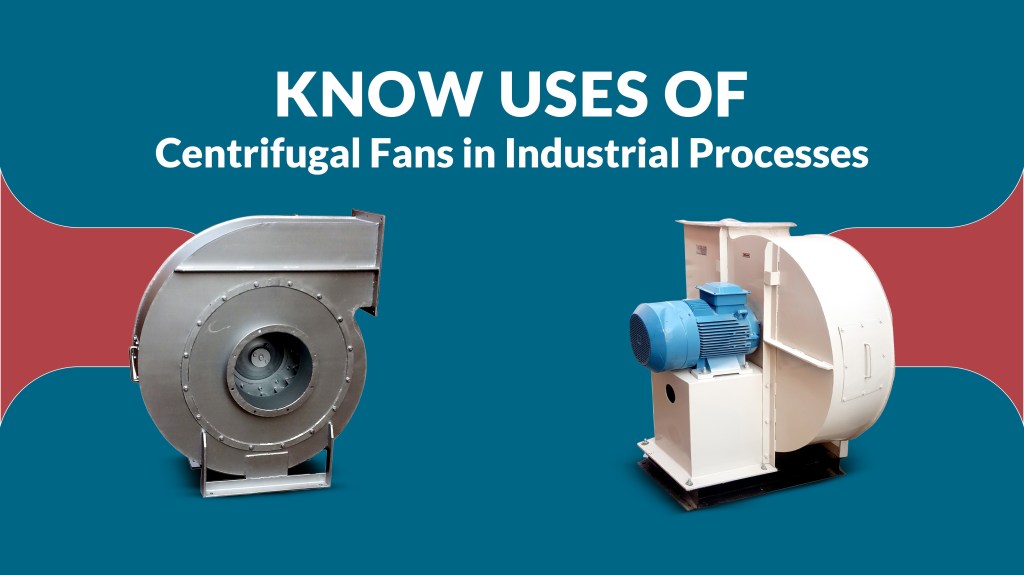
Know Uses of Centrifugal Fans in Industrial Processes 

Industrial Fans, Centrifugal Fans or Blower Fans are a cost-effective and efficient way to generate intermittent and continuous airflow for many industrial processes. These industrial fans are efficiently used in various industrial processes like ventilation, aeration, cooling, drying, and conveying materials. Centrifugal fans are mainly designed to operate at low as well as high temperatures, with acidic fumes, corrosive gases, etc. 

Centrifugal Fans are the most common type of industrial fan that ensure proper ventilation for the employees working in the industry. Industries like steel plants, paper, and pulp industry, textile industry, chemical industry, food industry, and glass industry used centrifugal fans to regulate the hot air generated from machinery. 

Ventech Systems is an experienced Centrifugal Fan manufacturer company in India. Below, we have listed some highlighted industrial processes where centrifugal blower fans can be utilized. 

1). Recirculation of Air 

The production of energy and heat is massive in heavy industries. Centrifugal fans provide a consistent and stable airflow that is needed to maintain the fuel combustion properly. 

For instance, in industrial boilers, centrifugal fans allow fresh air to blow into the system. It maintains the oxygen level suitable for ignition. Similarly, in power plant boilers, FD or Forced Draft Fans supply air necessary for fuel combustion. This process pushes the air through the air supply system into the furnace during combustion. 

2). Industrial Cooling 

Centrifugal fans are also termed industrial cooling fans because they can be used to displace gas or air from one place to another. Primarily these fans are used to drive cold air and blow hot air out of industry. 

For instance, in cement manufacturing factories, cooling fans are used in a large number. They used to blow cold air to cool the clinker. Similarly, in glass manufacturing factories, centrifugal fans are required to cool down the high temperature of the oven’s walls to cool the manufacturing material. 

However, air exhaust depends on the construction and design of specific fans. Centrifugal fans have a big diameter that helps to produce a high volume of air required in industrial processes. 

3). Re-Dusting: 

In many industries, centrifugal fans are used to collect dust. There are many types of dust collectors required to remove the nuisance. Industrial fans used are either induced draft fans or forced draft fans through the system. 

The re-dusting process in industries requires centrifugal fans that work on the pressure-type system and depression-type system applications. 

4). Air Drying 

Induced Draft Fans or Industrial Forced are required in industrial processes to control the moisture content and temperature. Hot air can be forced through these cooling fans, which also helps to circulate the air to remove excessive moisture.  

For instance, In the paper Industry, these cooling fans are used to dry paper sheets. It occurs by passing the construction material through a heated oven or exhaust air from the pulp of paper. Similarly, in Food Industries, centrifugal fans are required to remove food’s moisture content before it is sent for the packaging. 

5). Conveying Material 

In industries, centrifugal fans are used to convey or handle the manufacturing materials. Light-weight or small materials like sand, sawdust, plastic pallets, and wood chips can be effortlessly handled by Centrifugal Fans. But for heavy materials such as alloys and steel, centrifugal fans are required as abrasion-resistant. 

Common types of centrifugal fans used in industries to convey materials are Industry Exhausters and high-pressure Radial Fans. 

Final Words  

At Ventech Systems, we are expertized and experienced Industrial Centrifugal fans manufacturer in Noida. Therefore, we can assist you with the perfect Centrifugal Fans manufacturing solutions appropriate for your industrial processes. 

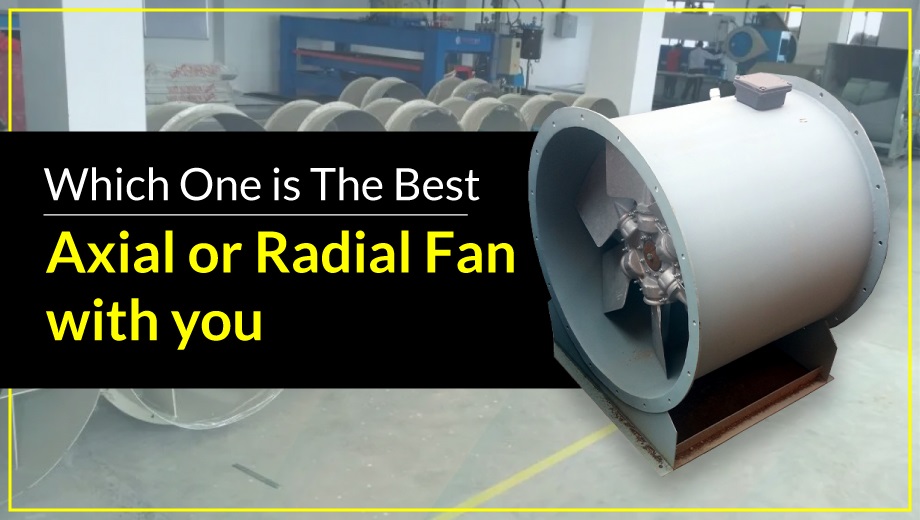
Which One is The Best: Axial or Radial Fan

When it comes to industrial fans, you have several options to choose from among them. But during the selection of the right industrial fan, choose them while considering the usage or purpose. There are two most popular and common types of industrial fans available today on the market: axial and radial.    

Understanding the Difference Between Axial Fan & Radial Fan  

In this write-up, we will help you to understand which one is better for your application: axial or radial. Both of these industrial fans are very useful, but there are different situations when one should be chosen over the another. Hence, choosing the right fan often comes down to some common factors such as volume, air displacement, blade type, etc.  

Axial Fans  

If you have ever lived in a house without AC or slept in a loft that needs a bit more air circulation in order to promote a cool and comfortable environment, the portable industrial fan that you can set up to make the environment cool is likely an axial fan.  

Axial fans’ names represent the way their blades operate. As they rotate around the axis and push air out parallel to the axis. However, the size of axial fans may be much larger as it is suitable for mining operations in factories.  

Axial fans fundamentally can be used when there is a need for a large volume of air. Through axial fans, one can have fairly low-pressure air that is not highly concentrated in any particular area.  

Radial Fans  

Radial Fans are also known as “centrifugal fans”. And, centrifugal fans are also known as squirrel cage fans, squirrel fans, and air blower fans due to their way of operating and the look of their certain model.   

They do not pull air parallel to its axis as axial fans do. Instead of it, they move the air from the center or radially. To generate air, radial fans or centrifugal fans first pull the air towards the fan. Axial fans often do it via side intake, which varies the fan size.  

An example of a centrifugal fan is the “blower” fan that is mostly used in commercial and residential environments in order to dry damp areas of the building with water damage. Though the volume of such types of fans is less than that of axial fans, the pressure is much higher. They also target a specific area. Radial fans are mostly used in heavy industrial or mining environments that are typically larger, drawing in air and then running through ducts before getting dispersed.  

Which One Is the Best for Your Application: Axial Fan or Radial Fan  

After understanding the difference between both of these fans’ axial and radial fans, it becomes critical to making the right choice for your application. Each type of industrial fan has its fair share of benefits as well as drawbacks. You may find the combination of each of these industrial fans that might be suited to your application the best. 

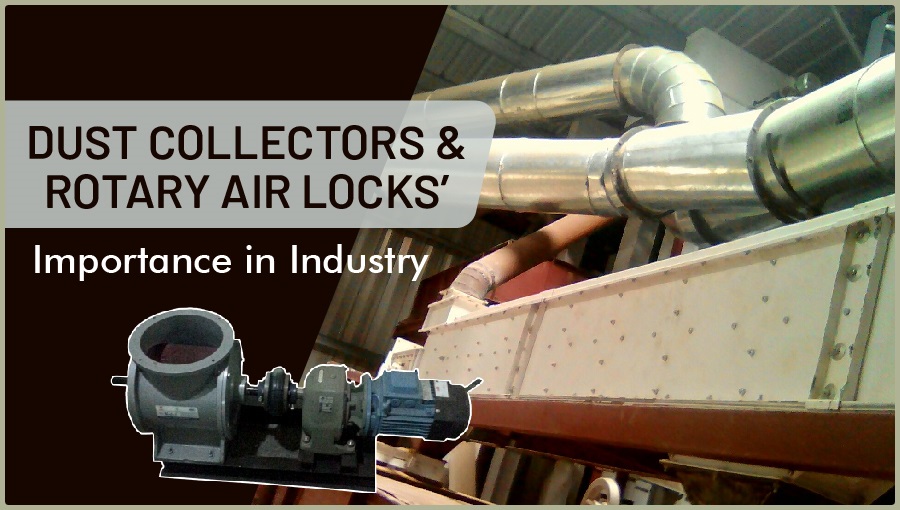
Dust Collectors & Rotary Air Locks’ Importance in Industry

Dust collectors are critical for maintaining employee health and safety in industrial environments, and airlocks play an essential role within these systems. Besides offering a diverse range of HVAC systems for various applications, we help reduce air pollution in industries in many ways. We are one of the few companies providing a wide range of emission control solutions to meet today’s air quality requirements. For many years, we have offered cutting-edge equipment and systems to address the ever-increasing problem of air pollution.

VENTECH is the best choice for various industrial air pollution control systems, from concept to commissioning. They purify the air for greater returns.

What Is the Process of Dust Collection?

Industrial dust collectors are critical for controlling air pollution in manufacturing and other commercial settings where particles in the air might pose a safety risk. They contribute to the safety of the environment within and around industrial facilities by eliminating and regulating potentially hazardous particulates generated during processing.

Dust collecting systems remove impurities from the air to enhance air quality. They function by pumping air through filters to remove dust and debris, then trapping and filtering the pollutants before releasing cleansed air into the atmosphere.

How do rotary airlocks work?

Rotary airlock valves are designed to outlive all other dust collector rotary airlocks. The unit has the most flexible seal, allowing bigger particles to pass through while maintaining the air gasket.

A dust collection system with an airlock enables continuous operation without the need to shut down and empty containers, reducing employee exposure to dust and making the system less prone to particle backup and filter degradation.

Without an airlock, dust would escape through the discharge valve, destroying the system. This reduces removal efficiency in vacuum systems, which are more commonly used because much of the dust returns to contaminate clean air. 

Airlocks prevent a lot of dust-related explosions and fires by employing specially designed rotary valves.

Airlocks come in a variety of styles. Generally, vacuums are used to segregate the dust and keep it from escaping, which protects exhaust fans, while some systems use pressurized dust collectors. 

The following are examples of dust collector airlocks:

  • Duplicate dump valves
  • Gate valves with knives
  • Rotating valves
  • Trickle valves

To get the maximum performance out of your rotary airlock valve, make sure you purchase the right one. It should be capable of processing the resources you want.

Do you need assistance choosing the most efficient framework to deploy for your industry? We will be happy to assist you. Please contact Ventech Systems so that we can book an appointment with you.

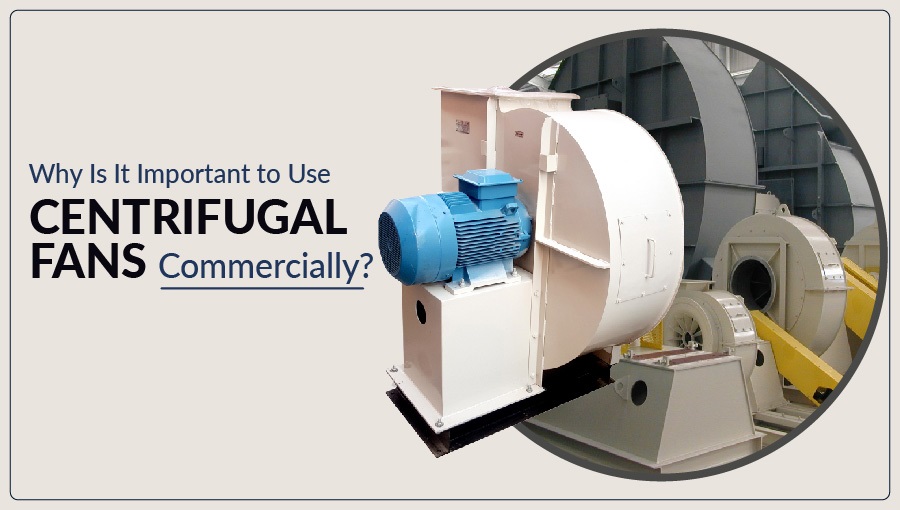
Why Is It Important to Use Centrifugal Fans Commercially?

Centrifugal fans are strong, drum-shaped devices that create a high-pressure airflow for cooling and ventilation. Centrifugal fans are known for their dependability, versatility, and low noise levels. They can transport both gas and air and require little maintenance.

It is difficult to know where to begin when attempting to increase ventilation in your commercial environment. You’ll need to consider air pressure, air quality in your environment, and even where you want the air to flow. As a result, centrifugal is the best option for optimum air ventilation.

The operation of centrifugal fans

These fans aid in the movement of air and gases in industrial and even larger commercial settings. It consists of a fan blade, a motor, and an enclosure that surrounds it. The motor size and fan blade shape might vary depending on its design.

It is also possible to change the direction in which the fan’s blades rotate.

These blower fans function by lowering the pressure in the center of the blade, which draws air into the fan. High-pressure zones exist around the blade’s edges, and they also serve to expel kinetic energy.

This air is then expelled from the fan’s cage.

Their strength and power make them particularly useful in air pollution management, ventilation in areas with a pressure drop, and chemical processing units, among other applications. Because of their high pulling power, these professional air blower alternatives help with dust collection and keep the air clean.

Centrifugal fans excel in the following industries:

  • Steel plants
  • Chemical industry
  • Paper and pulp manufacturing
  • Textile industry
  • Food industry
  • Glass industry 

The benefits of centrifugal fans

Low-Maintenance: Low maintenance is one of the best aspects of a centrifugal fan. You don’t have to spend hundreds of dollars on maintenance every year.

Periodic cleaning is necessary because too much dirt and dust on the blades can cause overheating and premature motor failure.

You may also clean the motor surface and ventilation ports with a tiny vacuum.

Control Airflow: These fans can easily handle airflow and pressure in commercial buildings or industries. They can take on any challenge you throw at them. They can process clean air, impure air, and even damp air.

Longevity: Centrifugal fans are durable. It is time-tested testing equipment that is suitable for any environment. They can work in corrosive conditions and still perform well.

Saving Energy: It aids in the maintenance of your bills. We know you’re looking for strategies to keep your energy expenditures under control. A centrifugal fan can help with this. Their continual airflow keeps energy efficiency levels high.

Modified Easily: These fans are available in various sizes and can be modified as per the demand and location of your industry.

We hope this blog has helped you understand centrifugal fans and why you should buy them. Make sure you receive the best fans if you want to reap all the above benefits.

That is where we would like to assist you. You can visit us to learn more about the fans.

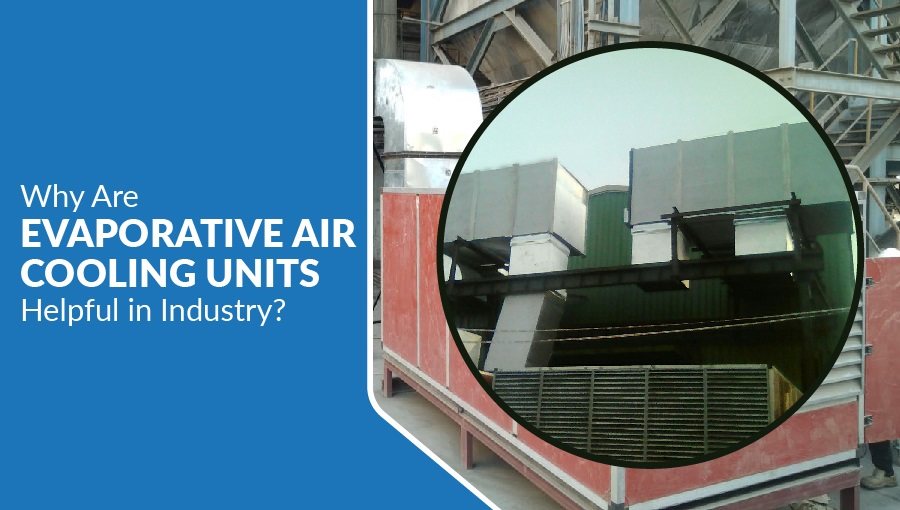
Why Are Evaporative Air Cooling Units Helpful in Industry?

The evaporation of air is a natural cooling process, much like the wind blowing across hills. Evaporative air coolers provide 100% fresh, filtered cool air for a fraction of the cost of an air conditioner. This makes it cost-effective for cooling large spaces.

Industrial buildings can benefit from evaporative cooling with the right technology.

What exactly is evaporative cooling?

The basic principle behind industrial cooling systems is to establish a natural cooling process. This is accomplished by evaporation, which aids in supplying fresh air flow directly into your facilities. In general, the relevant evaporative coolers will circulate heated air through a water-soaked cooling medium, which cools it down and gives cool, fresh air to the specified location.

Evaporative cooling is one of the most dependable and cost-effective means of maintaining optimal temperature and humidity levels. The “Ventech” Evaporative Air Cooling Unit is what your evaporative cooling system requires to function successfully and affordably.

Why is evaporative cooling used?

Cost-effective: Water evaporation reduces the temperature of a dry bulb. Evaporative cooling is a cost-effective form of cooling.

Low energy consumption: Natural air cooling is used without artificial techniques, reducing energy consumption.

Eco-friendly air conditioning: Evaporative cooling is used to chill the air instead of mechanical cooling.

What are the benefits of an evaporative air cooling unit?

Cool and fresh air

  • 100% fresh air for superior indoor air quality.
  • Dust-free atmosphere due to clean and changed air movement.
  • Aids in the diluting of viral density in the air, lowering the risk of infection from contagious viruses in the air and decreasing health risk.

Economical Price

  • Our products contribute to LEED and other energy certifications.
  • Outstanding return on investment.
  • energy savings of up to 60%.
  • Advantages of carbon credits
  • Lower operating expenses

Enhances the Working Environment

  • Mechanical refrigeration can be replaced in industrial, commercial, institutional, and agricultural applications.
  • During peak summer months it reduces the fresh air temperature.
  • Lower the temperature while using the least amount of energy.
  • It’s simple to set up and maintain.
  • Increased output.
  • Reduced absenteeism.

The Cool Air-Cooling Method

  • Comfortable Working Environment – Beat the Heat Quickly and economically
  • Improved indoor air quality and productivity
  • Helps in the reduction of greenhouse gas emissions
  • There is no sick building syndrome.
  • There is no ozone depletion.
  • There were no CFCs detected.

The Luxury of Customization

  • Our customers can customize and select according to their specific needs.
  • We can provide compact and strong air washer units in single and double-skin construction to meet the needs of our clients.
  • Our high fabrication quality guarantees low casing leakage, low alter bypass leakage and high mechanical strength.
  • We also offer Civil Masonry Type Air Cooling Units with various equipment fitted inside an ergonomically built room for demanding applications.
  • Low RPM is intended for lower noise levels and trouble-free operation.
  • Top, bottom, and side discharge options are available to accommodate the site layout.

How does it work?

  • Evaporative cooling devices use the natural process of evaporation to convert hot air into a cool breeze.
  • A fan blows hot, dry air across cooling pads that absorb water from a reservoir.
  • When hot air passes over the cooler pads, the water molecules on the surface evaporate, lowering the temperature of the air inside the system.
  • This fresh air is circulated throughout a building, forcing hot air outside.

Contact our team of experts to learn more about evaporative air cooling or for assistance in selecting the right system for your needs.

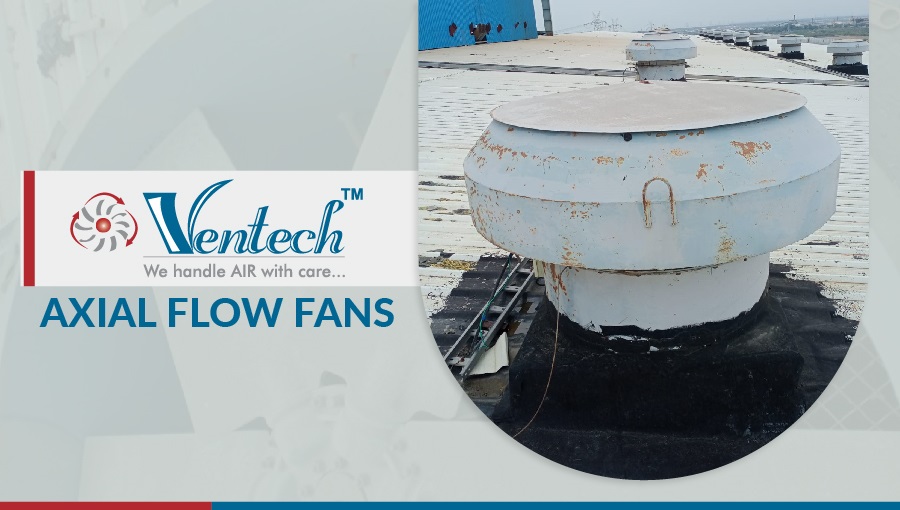
Axial Flow Fans-Ventech Systems Pvt. Ltd

VENTECH SYSTEMS, a pioneer and renowned leader in air handling technology, provides a diverse range of axial flow fans for industrial ventilation, air conditioning, dust extraction, and fume extraction systems.

Axial fans come in a variety of blade and hub designs to meet the performance needs of each application. It is our original design that allows us to manufacture a wide range of axial fans tailored to specific needs.

A fan’s design is influenced by its installation. Aside from physical qualities like pressure, flow rate, and temperature, the operating system and installation location are significant. The size of a fan is influenced by its motor and accessories.

It provides various varieties of airflow ventilators that are meant to exhaust all industrial pollution from the factory, industrial unit, or other covered spaces, including smoke, gases, moisture, odors, heat, dust, and other pollutants. At the same time, these axial flow fans provide fresh air inside while providing a safe, clean, and comfortable environment.

These ventilators are simple to install in most industries, like warehouses, factories, garages, and restaurants, among others, to control temperature and keep pollutants and heat away.

Axial fans pull air into the fan and expel it in the same direction using a propeller. All Ventech Axial Flow Fans are custom-made to fit all purposes and mounting positions.

The impellers, hubs, and blades are made of aluminum alloy, ensuring high efficiency and low noise. A variety of impellers are available in aluminum, with fixed blades or changeable blades and pitch angles.

Highlights include:

  • Minimal Maintainance
  • Noiseless
  • Low power density
  • Large Volumes of Air
  • Vibration Free
  • Cost-effective
  • Optimum Performance

These are some of the most important characteristics and applications of axial fans. In recent years, these fans have gained widespread popularity among many industries due to their efficiency and effectiveness for general-purpose cooling.

We manufacture fans to meet any ventilation requirement. VENTECH offers one of the most complete and diverse axial fan families on the market.

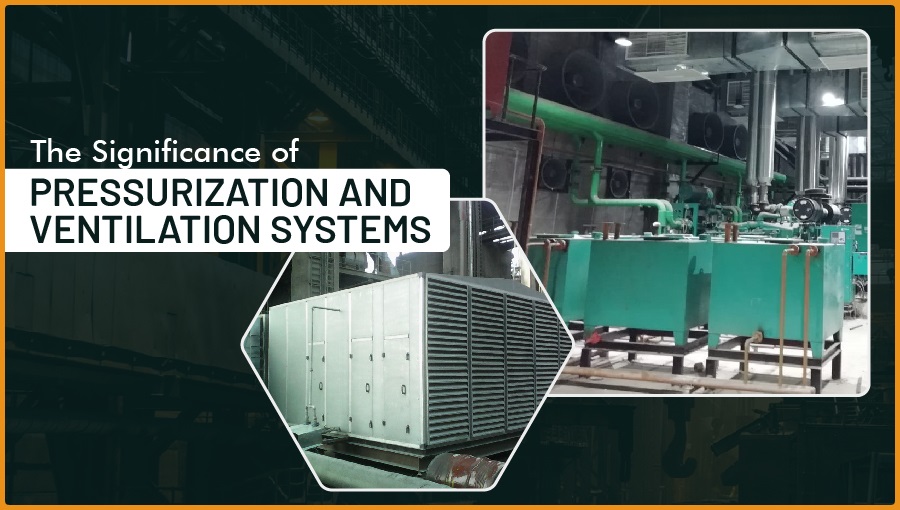
The Significance of Pressurization and Ventilation Systems

Filtered air is supplied to a work area by a forced ventilation system. If the functional area’s internal air pressure exceeds the air’s density, dust and contamination will not be able to enter. As a result, this system will keep the working environment clean and ventilated. Natural ventilation is rarely satisfactory unless outside circumstances are excellent, which rarely occurs. The natural supply of fresh air is determined by the temperature difference between inside and outside. It is rare for fresh air to flow into an inhabited space unless a breeze is blowing in the right direction.

As a result, natural ventilation is ineffective when the weather is hot and windless. Additionally, dust can’t enter the building spaces through faulty air ingress control. So, forced ventilation systems are required in the majority of cases, and three alternative methods can be used in this situation.

  1. Extraction/exhaustion of air
  2. Access to fresh air
  3. Sequential extraction and supply

Industrial facilities need to create a pressurization effect to achieve dust proofing, which can typically be achieved by cleaning incoming air if necessary.

The degree of air cleanliness is dictated by the requirements of the process being carried out in an industry, and it can be achieved by using a suitable filter medium such as HEPA, MICROVEE, HDPE, and other high-efficiency filter media.

Let’s explain the difference between ventilation and pressurization systems in detail.

Ventilation System-

Ventilation systems are used to provide enough air circulation in the working area for people’s comfort.

There are two types of systems. In a dry ventilation system, outside air is pumped into the area without cooling. In many circumstances, such systems are installed to pressurize the space. Outside air is cooled here before being introduced into the atmosphere. Cooling can be accomplished using an evaporative cooling system, a typical spray-type system, or Celdec-type cooling pads.

Proper exhaust is required in both of the applications.  Natural air might come through doors and windows, or mechanical air can come from ducts and fans. Roof ventilators are sometimes placed to remove the heat from the area.

Pressurization System-

Pressurization systems are installed to keep the enclosed region at a little higher pressure than the adjacent area. This is done to prevent air, smoke, or gases from leaking into the enclosed region from the adjacent area. All doors and windows are kept closed in this type of application. When any door is opened for any reason, the inside air tends to escape and no outside air enters the enclosed region.

Electrical Rooms, Pharmaceutical Blocks, air-conditioned areas, engine assembly areas, lift machine rooms, compressor rooms, and staircases are all places where the system can be used.

Ventech Systems manufactures a variety of ventilation systems for a variety of industries in India. Please do not hesitate to contact us if you have any questions or need any services.

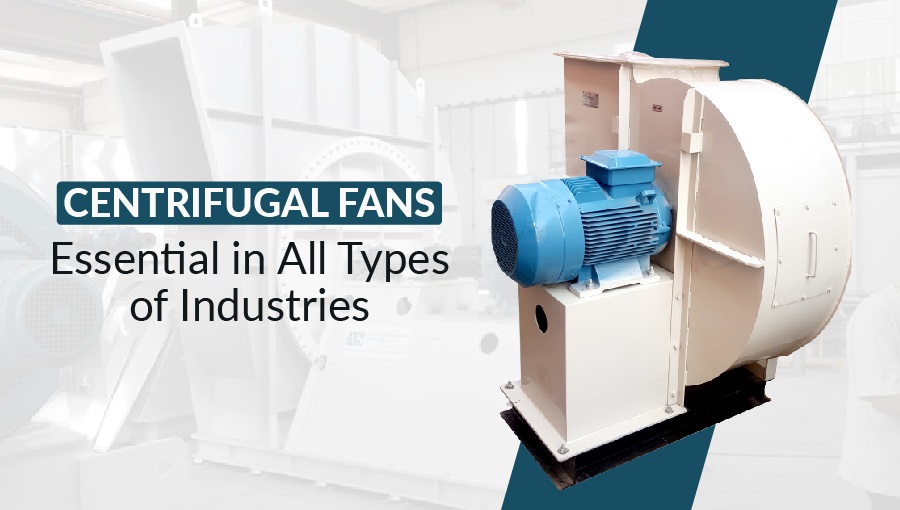
Centrifugal Fans: Essential in All Types of Industries

A centrifugal fan is an air-moving pump or motor. It draws air into the blower before pushing it out at a 90-degree angle. A centrifugal fan consists primarily of an impeller and a motor. Impellers pull or suction air as opposed to propellers, which push.

Centrifugal fans are common in the HVAC industry. They are more likely to be found in building ventilation systems. Industrial processes frequently utilize them to transport gases or chemicals. Centrifugal fans are also used in air pollution control systems. They are effective at dust management.

They are employed in industries where higher volumes of airflow with constant pressure are required. They are quite beneficial in industrial processes such as dust collection, drying and cooling, general ventilation, and air circulation.

The most noticeable distinction between centrifugal blowers is the angle of their blades, which might be backward, forward, or radial (the blades extend out from the impeller).

A Centrifugal Fan’s Operation

The revolving fan blade creates a low-pressure zone in the center of the blade and a high-pressure zone at the blade’s edges. It also increases the kinetic energy of the air. The low-pressure area in the fan’s center creates a vacuum, which draws air into the fan. The air flows from the center of the fan to the fan’s outside edges. It flows out of the container around the impeller in the correct direction.

These centrifugal fans have their quality features. The sort of industrial fan you require in your operation to achieve efficiency and dependability is determined by airflow volume, static pressure, and the application of the fan. Once you’ve identified those criteria, you’ll be able to tell Ventech Systems to select the best fan for your application.

Industry Usage

are suitable for a wide range of applications. Chemical processing, toxic gas management, dust collection, dryers, smoke control, process cooling, and process heating are a few examples.

The following are examples of common centrifugal fan applications:

Clean Air Handling- Air movement is an important aspect of every industrial operation or facility. Industrial air handling activities support processes while also ensuring clean air in the surrounding area.

Material handling- Sand, plastic pellets, sawdust, wood chips, grain paper trim, and other particles can be processed using centrifugal force material handling. They range in size from microscopic particles to heavy, rough compounds.

Processes involving high temperatures- Many processes rely on high-temperature heating systems. Heat is circulated through chambers via a heat convection system, which needs the employment of precisely engineered centrifugal fans.

Dust loading procedure- These fans are also used in industrial processes as part of the dust collection system to maintain air quality. The system’s many components can move small particles alongside the dust and can include air filtration.

To know more about centrifugal fans and applications, contact our experts or visit us at: https://www.ventechsystems.com/centrifugal-fan-manufacturers-in-india.php

How to Prevent Pollution From Industries

Pollution prevention refers to any practice that reduces, eradicates, or limits gas emissions before they occur. The prevention of pollution can be applied to any polluter, including those in the energy, agriculture, federal, consumer, and industrial sectors. Air pollution has an enormous impact on health, in part because it causes pollutants to move deep into the lungs. These invisible, harmful particles can affect cardiovascular and respiratory diseases. To control air pollution from industries and protect the environment and people’s health, it is important to use Ventech dust extraction and collection systems

Dust extraction and collection are critical components of industrial air pollution control. Modern industrial practice necessitates a safe and sanitary environment for all humans.

Engineers and governments must take proper consideration and effective action to protect the environment from industrial pollution. To control air pollution, dust extraction and collection are critical in any industry, whether it is a large steel plant, a coal handling plant, a cement plant, or even a small-scale factory.

A dust extraction system must be customized to the working environment. The operating frequency, material type, load, space, and quantity of air are to be considered. Ventech designs dust collection systems taking into account the specific working environment, ensuring they are reliable and efficient.

A dust collection system is distinguished by:

  • high potency
  • minimal energy consumption
  • explosion-safe design 

A dust collector is a system that collects dust and other impurities from the air and environment to improve the quality of air released from industrial and commercial processes. Ventech Systems offers a diverse range of dust collectors that meet industry standards. The basic principles of a dust collection system are to control, convey, and collect. We also custom design, manufacture, and install dust collectors, as well as hoods, ducts, blowers, chimneys, and other accessories for our customers. All dust collectors are built to the highest standards of quality, efficiency, and safety.

Design a site like this with WordPress.com
Get started